 Español
 English
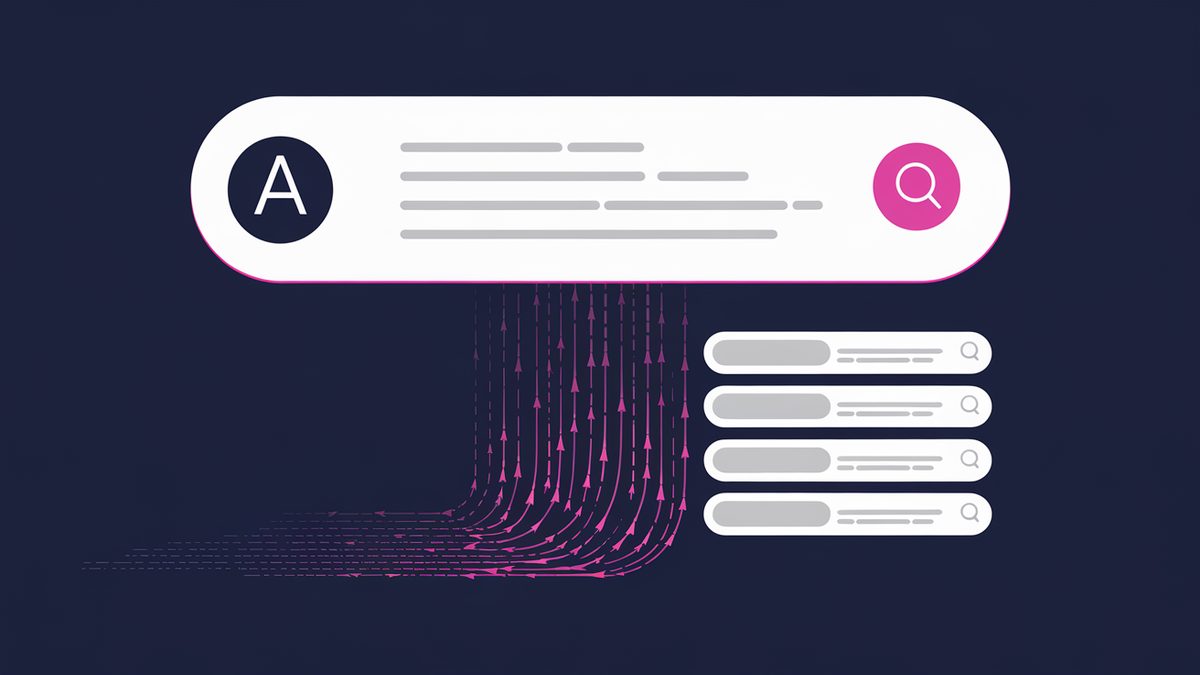
You look at Search Console and it doesn't add up: you're still first for your keywords, impressions even went up… but clicks are falling. It's not a measurement error or a penalty. It's that above your result, Google placed an AI Overview that answers the question before anyone reaches your site.
The good news: you can win traffic back. The key isn't fighting the AI Overview — it's being the source it cites.
What is an AI Overview and why does it take your clicks?
An AI Overview (AIO) is the AI-generated summary Google shows above the blue results: it answers the search right there, with links to a few sources. It's convenient for the user. For your traffic, it's a wall: many read the answer and click nothing.
The numbers confirm it. According to Ahrefs, when an AI Overview appears the CTR of the top-ranking page drops by around 58%. A Seer Interactive study of more than 3,100 searches (Q3 2025 data) measured a 61% drop in organic CTR when an AIO is present. And "zero-click" searches — those that end without any click to a site — keep rising fast. Translation: you can be #1 and still lose a good chunk of your visits, without doing anything wrong.
Read these numbers with their date, because it's a moving picture: Seer itself recorded a partial CTR rebound in early 2026 on AIO queries (from ~1.3% in December 2025 to ~2.4% in February 2026), still below prior levels and with the trend open. The exact magnitude will keep changing; the underlying direction — the AI Overview keeps part of the click that used to be yours — is what holds.
The "great decoupling": why impressions hold but clicks fall
Here's the reading trap. In Search Console you'll see impressions hold or rise — Google still shows you — while clicks fall. That decoupling between impressions and clicks is the classic fingerprint of an AI Overview eating the interaction.
If you only look at impressions, everything seems fine. If you look at the business (visits, inquiries, sales), something's off. The metric that misleads is the impression; the one that matters is still the click and what happens after it.
The twist: being cited in the AI Overview returns clicks
Here's what almost no one tells you: the AI Overview doesn't spread the damage evenly. Brands cited inside the AIO get 35% more organic clicks than those that aren't — and up to 91% more on paid.
So the problem isn't that the AI Overview exists, it's being left out of it. If Google cites you as a source of that answer, you win back visibility and clicks right where you were losing them. The fight changed target: it's no longer just being result #1, it's being the source the AI chooses to answer with.
There's also an underlying trend worth keeping on the radar. Today being cited in an AI Overview is organic traffic — with no ad cost — but Google has been adding advertising inside these same surfaces: according to Semrush, Google Ads appeared in 25.56% of AI Overview searches in October 2025, versus 5.17% in March of the same year — nearly 400% more in eight months. It's not an alarm or a call to rush: it's context showing that the generative-answer space is getting more contested. Working organic visibility inside it is a sustained strategy decision, not a race.
What you recover: how to get the AI Overview to cite you
Getting cited isn't luck: it's the same logic AI uses to choose who to name. You work it with these levers — the same ones that decide whether your site appears in ChatGPT:
- Answer up top and clearly. The AIO extracts the passage that answers directly and self-contained. If your answer is buried at the end of a long paragraph, it won't take it.
- Back it with data and sources. A claim with a citable figure has far more chance of being used than a generic one.
- Structure it for the machine to read. Headings that are questions, lists, tables, short paragraphs. They tell Google where each thing is.
- Cover the full intent. AIOs combine several sub-questions; content that resolves them all has more surface to be cited.
None of this takes you out of Google: it's built on the same technical SEO as always. What changes is that this work now also decides whether you're part of the AI answer or buried under it.
How to spot it in Search Console (in 5 minutes)
No guessing needed. Open Google Search Console, look at the last few months, and find the pages or queries where impressions hold or rise but clicks and CTR fall. That pattern is your suspect list: searches where there's probably already an AI Overview taking the click. Prioritize your content work there, because that's where you're losing traffic you had already earned.
The bottom line
Losing clicks while ranking #1 isn't a punishment or your mistake: it's the effect of AI Overviews on traffic. The way out isn't to give up or fight Google — it's to get into the answer: answer clearly and up top, back it with data, structure for the machine, and cover the full intent. The AI Overview changed SEO's rules, but it didn't end it — it moved it one square: from appearing in the list to being the source of the answer.
Frequently asked questions
Do AI Overviews remove me from Google?
No. Your page stays indexed and ranking; what changes is that the AIO can answer the search first and keep the click. That's why the focus shifts to being cited as a source.
Can I block the AI Overview from using my content?
Not usefully: blocking it doesn't return the click, it only removes you from the answer (and its citations). The opposite is better: work to be cited, which is what recovers traffic.
How do I know which searches are affecting me?
In Google Search Console, find the queries and pages where impressions hold but CTR falls. That decoupling is the clearest signal of an active AI Overview.
Does this also apply to ChatGPT or Perplexity?
Yes. It's the same underlying logic — being the source AI chooses — applied to different engines. Working your content's extractability pays off across all of them at once.
Losing clicks to AI Overviews? Book a meeting with Seotronix to get back into the answer.